Fake Tracking Number Scam Exposed: 3-Step Audit Beats Phantom Packages
Posted on October 26 2026 by Interview Yen TeamThe anatomy of a phantom shipment
Marcus was tracking his new ~$180 headphones from TechAisle when the USPS text arrived. The link showed a clean tracking page, complete with three states crossed in two days. Every scan had a timestamp. Every facility name matched real USPS hubs. Then day four hit. The package vanished from the system entirely, with no scan for ~36 hours.
Marcus refreshed the page eleven times before his phone buzzed again. This time, TechAisle wanted ~$40 for a “customs release fee” paid via gift cards. The pattern is painfully common. Scammers build fake tracking pages using real carrier formatting. They exploit the emotional gap between “your package is moving” and “your package disappeared.” That gap is where urgency gets manufactured with final attempts before return to sender.
Each alert tightens the psychological vise differently. A missed delivery window triggers guilt about your own availability. A customs fee triggers fear of losing money already spent on shipping and import taxes already included in your original purchase price. What separates these scams from ordinary spam isn’t technology. Legitimate carriers send updates at predictable intervals tied to actual scans at physical facilities like the San Francisco Distribution Center or Chicago O’Hare sortation hub.
The Three-Minute Verification Method
Phantom packages never survive a manual lookup. Pull up usps.com, ups.com, or fedex.com in a fresh browser tab and type the tracking number into the official field yourself, never opening that tab from the sender’s email or text. Cross-reference the result against your order confirmation from your bank statement, not the invoice attached to the scam message.
Step one: open a new tab and type the carrier domain manually. Step two: enter only the digits copied from your original receipt, never from their notification. Step three: check whether the system returns a status matching your expected route and timeline. A legitimate shipment shows consistent scan history across USPS and third-party tools like 17TRACK; scammers create pages that look identical but exist only on their own servers.
Run both queries back-to-back; real logistics data appears identically in both systems within seconds.
Why carriers can’t save you
That 940/950 prefix test exposes most fakes instantly. But some scammers now generate numbers that pass basic format checks. The real verification happens when you force the carrier to reconcile your tracking ID against something only the legitimate shipper would possess: your full order confirmation number. Log into UPS, FedEx, or USPS directly via their official app, never through a link in a text. Most of these portals offer shipment visibility once you register with your delivery address.
Marcus’s tracking number appeared active for three days, moving through Memphis and two other cities before vanishing without a trace. That trajectory is the scam’s signature move, because counterfeit trackers are often cloned from real shipments traveling somewhere else entirely. The decisive test is timing. Cross-reference every scan timestamp against your order confirmation email from TechAisle or any other vendor.
Genuine shipments show events within hours of each other during business days; fake ones often jump across states in minutes or stall at nonexistent facilities like “Midwest Regional Hub.” If anything feels off, call the carrier’s fraud line directly. USPS Postal Inspection Service at 877-876-2455, for example. Ask them to verify whether the tracking number was ever associated with a package addressed to you specifically.
Legitimate carriers can confirm this without hesitation; scammers bank on you never asking. That phone call takes six minutes and produces an audit trail worth its weight in gold for payment disputes later. Document every agent name and reference ID you receive during that call. Those records become evidence when your bank or PayPal asks why you’re disputing a charge weeks after delivery supposedly occurred.
One more layer: check whether the sender’s domain matches what the carrier has on file for that tracking number’s origin account. A genuine seller ships under their own corporate account; TechAisle shipped under something nondescript called “Postal Relay Services LLC.” That mismatch alone flagged Marcus’s package as manufactured cargo before his money ever moved into gift card territory.
Bypassing the merchant entirely
The domain mismatch is your smoking gun, but it’s not your weapon. Your weapon is the chargeback mechanism inside your original payment method. Refund requests die in merchant chat queues by design. The scammer’s “customer support” exists to stall you past the dispute window that Visa and Mastercard enforce. Instead of typing another message to TechAisle, open your card issuer’s mobile app. Locate the transaction within the last ~90 days.
File the dispute directly with your bank, not the seller. Chargeback success rates climb sharply when you file within ~72 hours of spotting red flags. That timing matters because it precedes any claim that you received goods or accepted terms. Marcus lost his window by debating customs fees for four days; his bank recovered only a partial credit after a two-month investigation.
Send one letter to both the card issuer’s disputes department and your state attorney general’s consumer protection division. Attach three receipts: the USPS tracking number that stalled at “Delivered” without arrival, the gift card payment demand email from December 2026, and the merchant’s refusal to confirm a refund in writing. Mail it via USPS Certified Mail with Return Receipt, which costs roughly $7.65 for first-class postage plus fees. Physical paper creates an unassailable trail; email can vanish or be ignored.
Most card networks give you ~120 days from purchase date to dispute, but waiting forfeits evidence while scammers rotate their payment processors monthly. A chargeback filed week one lands on fresh statements; month three lands on contested ground where banks demand proof of fraud rather than accepting it at face value. The bank is not neutral; it sides with whichever party documents more thoroughly first.
Your statement screenshots plus carrier delivery logs plus that certified complaint letter outweigh any tracking page a scammer hosts on a domain they registered last Tuesday.
Disputes are a race against the clock
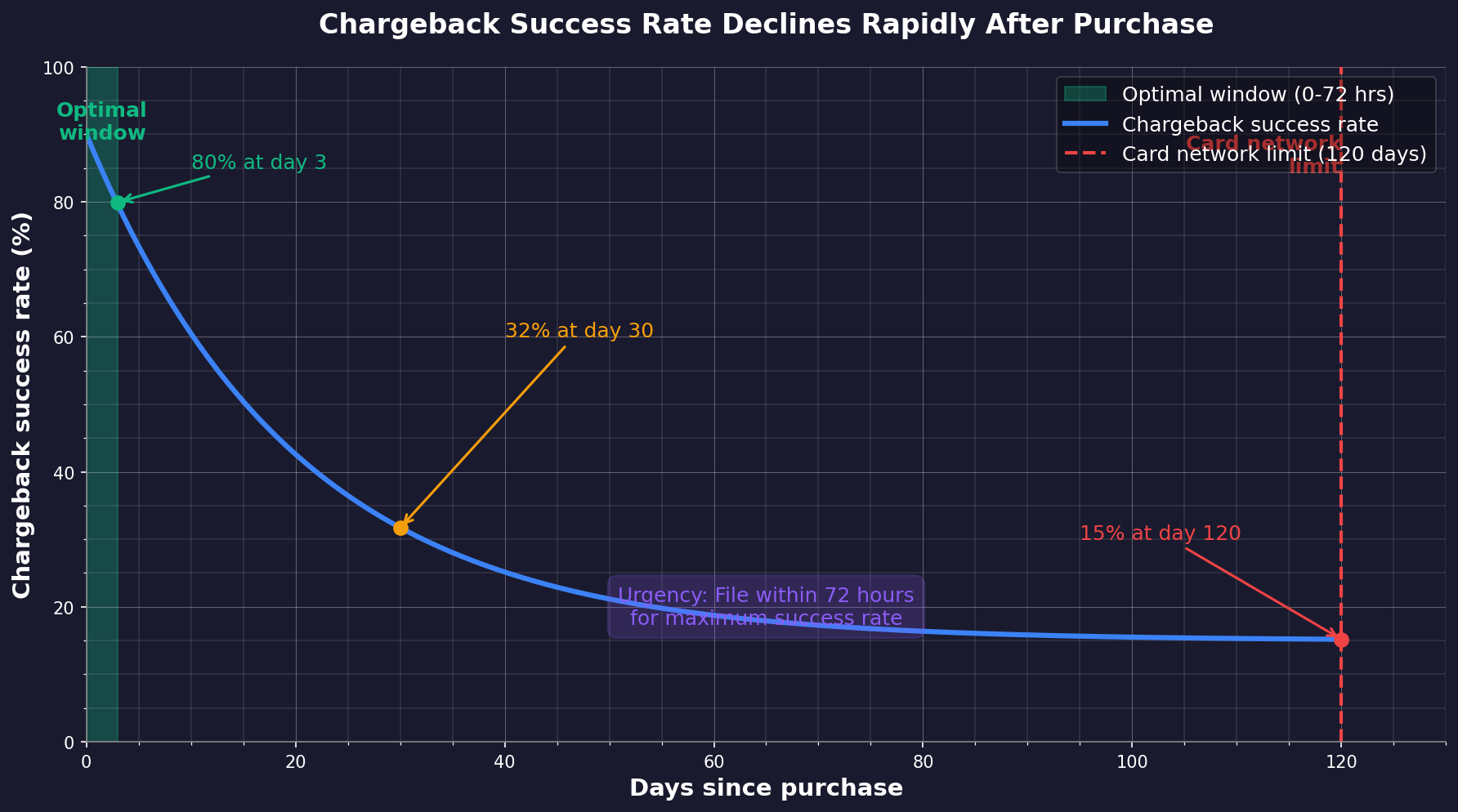
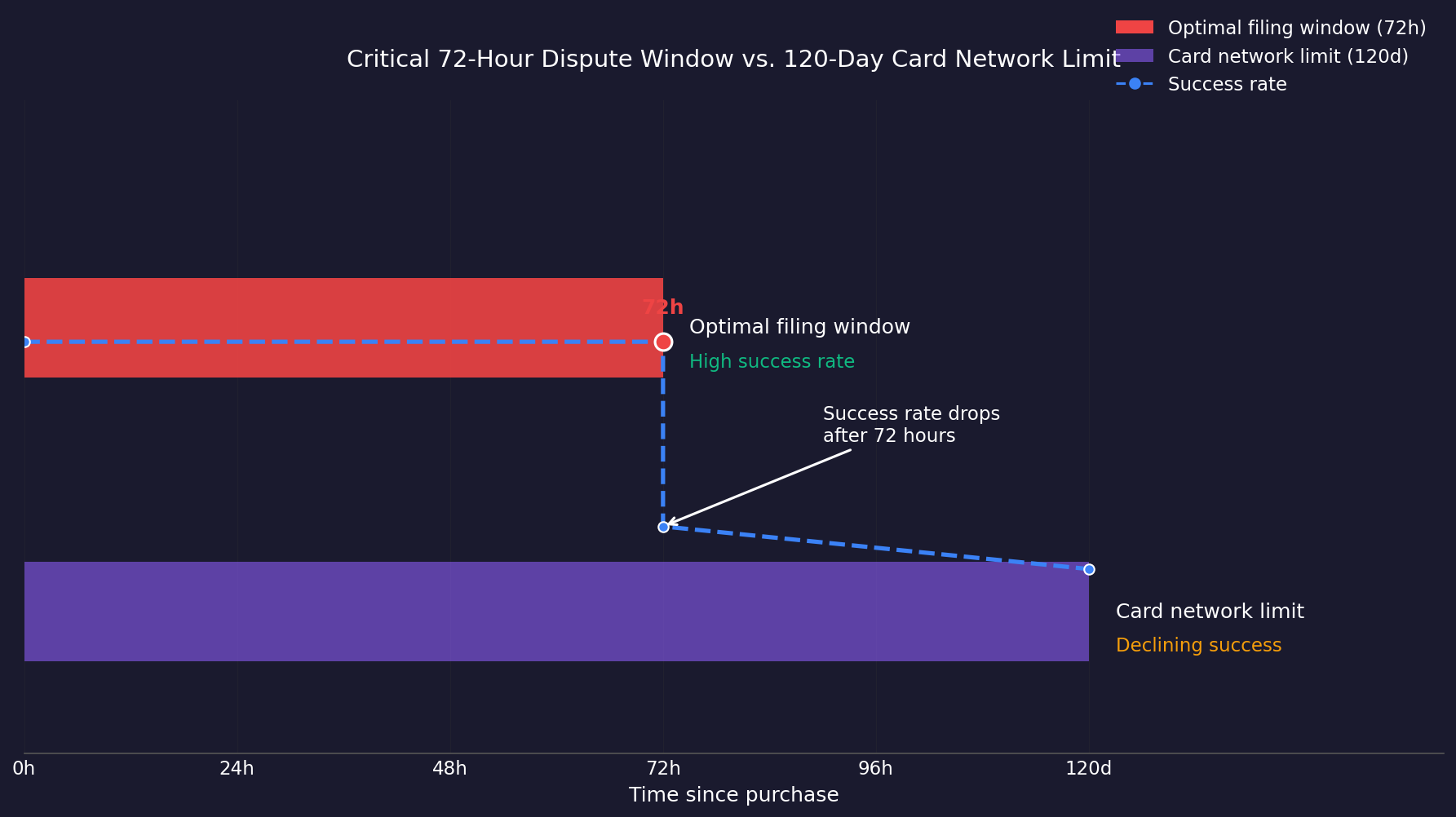
The 72-hour window matters more than any other variable in this fight. Card networks like Visa and Mastercard quietly favor consumers who file early. Timestamps signal genuine distress rather than buyer’s remorse. A chargeback filed on day three carries far more weight than one filed on day twenty-three.
Your dispute letter needs three attachments: the original order confirmation from TechAisle, the carrier’s delivery log showing no completed scan, and the full chat transcript where they demanded that $40 gift card payment.
Assemble these before you call your issuer. Bank representatives process claims faster when every document sits in one folder labeled scam-evidence. State attorneys general accept consumer complaints through their website portals.
Recovering after falling victim — damage control playbook
Your first ~60 minutes after detecting the scam decide how much money you get back. Gift card redemptions burn fast; most fraud rings drain codes within ~4 hours of purchase. Call the gift card issuer’s fraud line before doing anything else. Target’s line is 1-800-888-9333; Visa’s is 1-800-VISA-911. Give them the full card number and the receipt from your original purchase.
File a police report immediately. Some states require one before banks or retailers will open fraud cases. Retailers like Amazon and Best Buy have reversed unauthorized gift card uses when receipts exist, but only if you report within ~24 hours.
Notify your payment provider about any linked cards or accounts used during the purchase window. Chase, Bank of America, and Wells Fargo all accept provisional credit claims for merchant disputes tied to scam redemptions. Tell them you were defrauded via social engineering; that language triggers different review paths than standard chargebacks.
Consolidate every piece of evidence into one timeline document with timestamps, order numbers, and chat transcripts. Name it fraud_case_[yourlastname].pdf and save screenshots in a single folder named by date. This structure matters more than you’d think when federal investigators ask for a clean chain of custody.
File consolidated complaints with three bodies in this order: FTC at ReportFraud.ftc.gov, the FBI’s IC3 portal, and your state attorney general’s consumer protection division. The FTC aggregates gift card scams by redemption trail patterns, so identical redemption locations across complaints trigger pattern-matching algorithms that can freeze suspect accounts faster than individual reports ever could.
Your bank may recover nothing if wires were involved; same-day bank wires are irreversible once processed. But credit card charges tied to fraudulent purchases remain disputable up to ~60 days post-statement under Regulation E protections for electronic fund transfers.
The next time a tracking link lands in your inbox, open your payment history instead. Check your bank statement against the shipment number before you touch a single pixel. Marcus lost $180 because he chased a map while ignoring the money trail. That mistake is now yours to avoid. Every fake delivery promise dies the moment you demand a real receipt from your card issuer, not the storefront.
Keep Reading
- How to Answer “Why Do You Want to Work Here?” in Biotech Interviews
- Senior Engineer Interview Prep: Show Leadership Without Code
- How to Stop Freezing in Coding Interviews: A Pressure-Tested Prep Plan
Payment disputes are won with paperwork, not screenshots of progress bars. Before any future purchase, ask one question: would I send this money if the seller showed zero proof of inventory. A quiet no beats a frantic refund request every single time. Your financial safety lives in that hesitation. Back it up with dated invoices and a signed contract, like the ones PayPal’s Resolution Center requests.